



Rhineland-Palatinate Council for the Future of Sustainable Development presents position paper on circular economy and sends signal to Germany
Demands go far beyond the measures planned in the new Packaging Act
Rhineland-Palatinate highlights the importance of the circular economy for the future viability of Germany as a whole. The Rhineland-Palatinate Council for the Future of Sustainable Development (ZNE) – a committee of experts appointed to monitor the state’s sustainability strategy – has presented the state government with a statement entitled “The circular economy as the way forward for a sustainable Rhineland-Palatinate.” The 18-page position paper is regarded by associations and NGOs far beyond the state’s borders as a meaningful signal for the future of Germany.
Particularly controversial: on 11 February 2026, the federal cabinet is to vote on the new Packaging Implementation Act. Not one of the key approaches from the Rhineland-Palatinate position paper is part of it, even though many renowned experts confirm that those measures must be implemented to make the recycling industry in Germany sustainable.

That’s why BNW and NABU are now declaring their support for the ZNE position paper and calling on the federal government to consider and incorporate its proposals:
Prof. Dr. Katharina Reuter, Managing Director of the German Federal Association for Sustainable Business (BNW e.V.): “The circular economy offers enormous potential for strengthening the business location, creating jobs, and protecting the climate. The statement by the Rhineland-Palatinate Council for the Future of Sustainable Development rightly points out that the solutions already exist. What’s missing is the political framework. Companies that operate circularly, protect the climate, and consume fewer resources must not be systematically put at a disadvantage by the market. The federal government should finally push the National Action Program for the Circular Economy through the cabinet and promote circular lead markets through public procurement. Companies are ready to go. Now it’s up to the federal and state governments to put the right framework in place.”
NABU President Jörg-Andreas Krüger: “A functioning circular economy for plastics is indispensable to reducing our resource consumption and the burdens on the climate. One thing is clear: the circular economy is not eco-idealism; it can be the basis for sustainable business models – in the packaging sector too. It is alarming to see that many plastics recyclers are now under severe economic pressure. As long as new plastic is cheaper than recycled plastic, linear business models have an unfair competitive advantage over circular solutions. This is not a sign of functioning markets. Rather, it shows that environmental and climate costs have not been sufficiently taken into account to date. If we are serious about recycling, we need reliable political conditions that reward the use of recycled materials and ensure urgently needed investments. Legislators are called upon to turn the circular economy from an aspiration into an economic reality.”
Werner & Mertz owner Reinhard Schneider, who, as a member of ZNE was instrumental in drafting the statement together with Prof. Dr. Klaus Helling, said: “The long-overdue creation of a level playing field for the circular economy in Germany has always made sense for ecological reasons and for domestic job security. More relevant than ever – in an age of increasingly problematic raw material dependencies and associated hybrid threats – the circular economy is applied resilience.”
Prof. Dr. Nadine Kammerlander, Chair of the Rhineland-Palatinate Council for the Future of Sustainable Development: “The statement makes clear that the technical feasibility of a high-quality circular economy has been proven, both for plastics and for building materials. However, there is still a large gap between what is possible and what is actually being implemented. Consistent political and economic incentives are still missing. Education also plays a key role. We can advance the necessary transformation only if the principles of resource conservation are anchored in all areas of education. The Council calls on politicians and business leaders to tackle this challenge together.”
Prof. Dr. Klaus Helling, Deputy Chairman of the Council for the Future of Sustainable Development Rhineland-Palatinate: “The Council sees the need for political action at all levels. The circular economy should play a greater role at the federal level, because the recycling rate for plastic is falling, and recyclable plastics from the Yellow Bag are still being incinerated far too often. Recycled concrete has been used only in pilot projects so far; binding incentives and standards are needed here. The potential of sustainable building materials such as wood and clay also should be exploited more in Rhineland-Palatinate.”
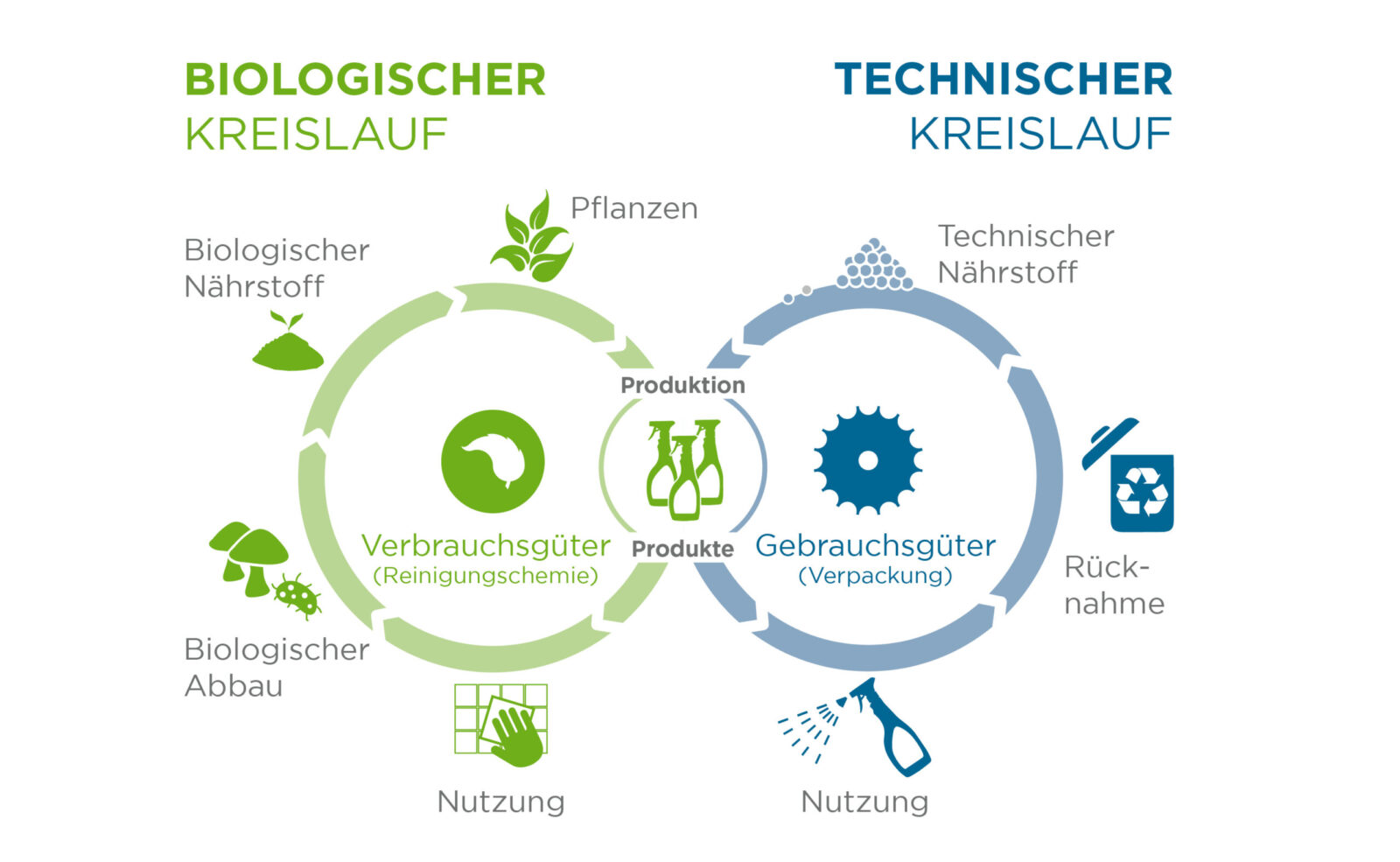
The position paper calls for the following measures at the federal level:
- Instead of consumers ultimately bearing the burden of the European plastic tax, in future the distributors of climate-damaging new plastic should be responsible for the levy – while post-consumer recyclates remain tax-exempt. This measure creates an economic incentive to invest more in recycling technologies and reduces the burden on the German treasury by 1.4 billion euros.
- In order to create a level playing field with fair competitive conditions, the federal government has to stop promoting non-ecological single-use plastics. Subsidies that are harmful to the environment and climate must be banned by ending the exemption of new plastic production from German mineral oil tax. New plastic must not be made artificially cheaper than recycled plastic through the EEG levy exemption. The mineral oil industry in Europe receives €128 billion in subsidies annually – a disaster from an ecological point of view.
- It also is proposed to set up a fund within Section 21 of the German Packaging Act, into which all companies that use new plastic pay. Only those that use recycled materials should receive a refund. The funds are to be targeted specifically at research, development, and the expansion of modern, high-quality recycling processes. Statutory minimum quotas for the use of recycled materials should be introduced, coupled with incentives for exceeding those quotas by up to 100 percent and setting binding quality standards for imported recycled materials.
- Recycling facilities in third countries should be required to verify compliance with European quality and environmental standards through independent audits. Only equivalent recycled materials should be allowed to enter the European single market. In addition to ensuring fair competition, rules and regulations should promote regional value chains and improve waste management infrastructure.
With its statement, the Council wants to make clear that the circular economy is a central path to the future for a sustainable Rhineland-Palatinate. The recommendations are to be incorporated into political strategies and measures where they can contribute to conserving resources, achieving climate targets, and enhancing innovative power and regional value creation.
The full statement (in German) is available at the following link: ZNE_2025_Stellungnahme_Kreislaufwirtschaft.pdf
Rhineland-Palatinate Council for the Future of Sustainable Development:
The Rhineland-Palatinate Council for the Future of Sustainable Development, appointed by the Minister President of Rhineland-Palatinate, is independent in its activities. It supports and promotes the implementation of Agenda 2030 and the United Nations’ global Sustainable Development Goals in Rhineland-Palatinate. For that purpose, it encourages social dialog on sustainable development in Rhineland-Palatinate, contributes to the further development of the state’s sustainability strategy, and comments on issues of sustainable development. The expertise and experience of the Council members are critical to the work. The Council takes up social concerns, brings them together, and incorporates them into its recommendations.