



Werner & Mertz rejects proposed plastic tax
Budget deficits should not be filled at the expense of the circular economy
The German government’s latest cabinet decision aims to raise additional revenue of 1.4 billion EUR per year for the consolidation of the federal budget. Although the proposal sounds good at first, a closer look reveals its shortsightedness. In the long run, the move would burden the German economy and endanger its independence.
The issue is the planned “plastic tax”. Since 2021, the EU has imposed a plastic tax that requires every member state to pay 80 cents for each kilogram of non-recycled plastic packaging. Germany generates about 1.7 million tonnes of plastic waste per year, which translates into 1.4 billion EUR. Until now, it was financed by general tax revenues, that is to say, borne by taxpayers. The planned plastic tax would transfer the costs in future to the distributors of plastic packaging.
However, no distinction would be made between plastic packaging made from virgin material and packaging made from recycled used plastic. That means even more uncertainty for the already struggling recycling industry in Germany. The distributor would still have no incentive to invest in more expensive recyclate and the additional costs could lead to even lower demand for packaging made from recyclate. In turn, investments in recycling facilities could come to a complete standstill.
The priority has to be independence from fossil oil sources
Consequently, Werner & Mertz decisively rejects the planned plastic tax as a purely fiscal instrument. The economic conditions for the circular economy in Germany should not be made more stringent just to fill general budget deficits in the short term.
That would be not only an ecological disaster, but also a significant risk to Germany‘s economy and security. In times of increasing energy and raw material prices, fragile supply chains and new threats to national security, the circular economy constitutes a strategy for ensuring national security and economic independence. Germany should give priority to achieving independence from crude oil if only to make the country less susceptible to political blackmail.
The German recycling industry is already suffering—in recent months, many sites in the plastic recycling sector have been closed, facilities shut down and bankruptcies filed as prices have further reduced the industrial demand for high-quality recyclate. Now, more than ever, recyclers, many of which are SMEs, need incentives and security to justify investments in high-quality sorting technologies.
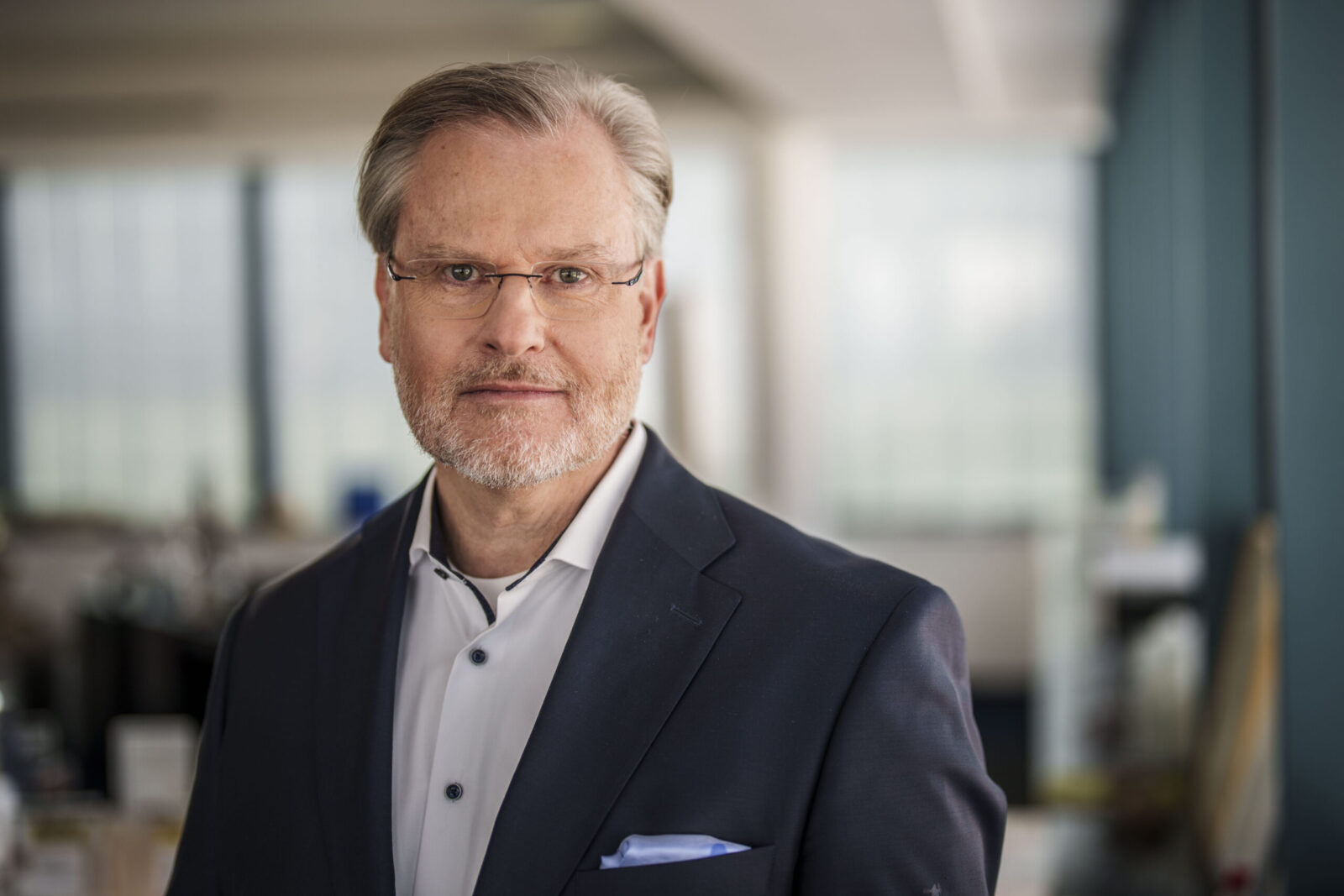
“As currently proposed, the German plastic tax would not be helpful. It puts an additional burden on Germany as a place for business, without providing any help at all for the circular economy. We demand instead eco modulation as per §26 of the German Packaging Act, which provides an incentive and promotes raw material resilence for the country,” says Werner & Mertz owner Reinhard Schneider.
Eco modulation instead of another burden
Werner & Mertz suggests a pragmatic implementation that can deliver targeted support for high-quality recycling in Germany. The idea is to set up a system into which all distributors of plastic packaging pay a slightly higher license fee via the license-granting dual systems to a neutral body that manages the fund. Next, the distributors of packaging made from recycled material claim reimbursement for the quantity of recyclate placed in the market in an amount that exceeds the previously paid fee. That generates a sufficient financial incentive to use recyclate and achieves effective scaling for a high-quality circular economy.
Werner & Mertz as positive example of high-quality recycling of plastic
For many years Werner & Mertz has been exemplary pioneer in the successful implementation of the circularity principle. As the forerunner in the use of post-consumer recyclate, the medium-sized manufacturer set a new record in June 2025 when its Recyclate Initiative reached the milestone of one billion bottles made from 100 percent recycled plastic. This year Frosch, the best-known brand of the family company, celebrates its 40th birthday.