



40 years on the way to petroleum independence!
Trusted brand Frosch celebrates a major birthday
The Frosch brand of Mainz is celebrating its 40th birthday in 2026. Today the strategy of the trusted brand is more relevant than ever. From the beginning, Frosch has been on the way to independence from petroleum.
Like Nature, Frosch works in cycles with plant-based ingredients of renewable raw materisls and does without petroleum. Its packaging too is sustainable. The bottles are manufactured completely from used plastic with an ever-growing portion from the Yellow Bag. To date, the manufacturer has put more than one billion bottles of 100 percent used plastic on the retail market – a true milestone!
“Our Frosch brand is, of course, a relatively small example for already achieved independence from petroleum, but is still a role model for other industries that should not be dismissed,” says Reinhard Schneider, owner of the manufacturing company Werner & Mertz.
Independence from petroleum achieves
- ecological resource conservation
- increasing resilience in political crises
- business success in domestic value creation
From the start: Really green. Really strong. Since 1986.
The introduction of the Frosch brand in 1986 gave consumers a sound solution for household cleaning in the middle of a decade marked by environmental catastrophes. The events at that time pushed people to rethink all areas of life. Many felt the need to get actively involved – in the community and at home.
The family company Werner & Mertz came up with a solution, and in 1986, began offering Frosch brand ecological products for everyone. In no time at all, consumers eagerly accepted the “small green wonder”. Since then the product range has been expanded continuously.
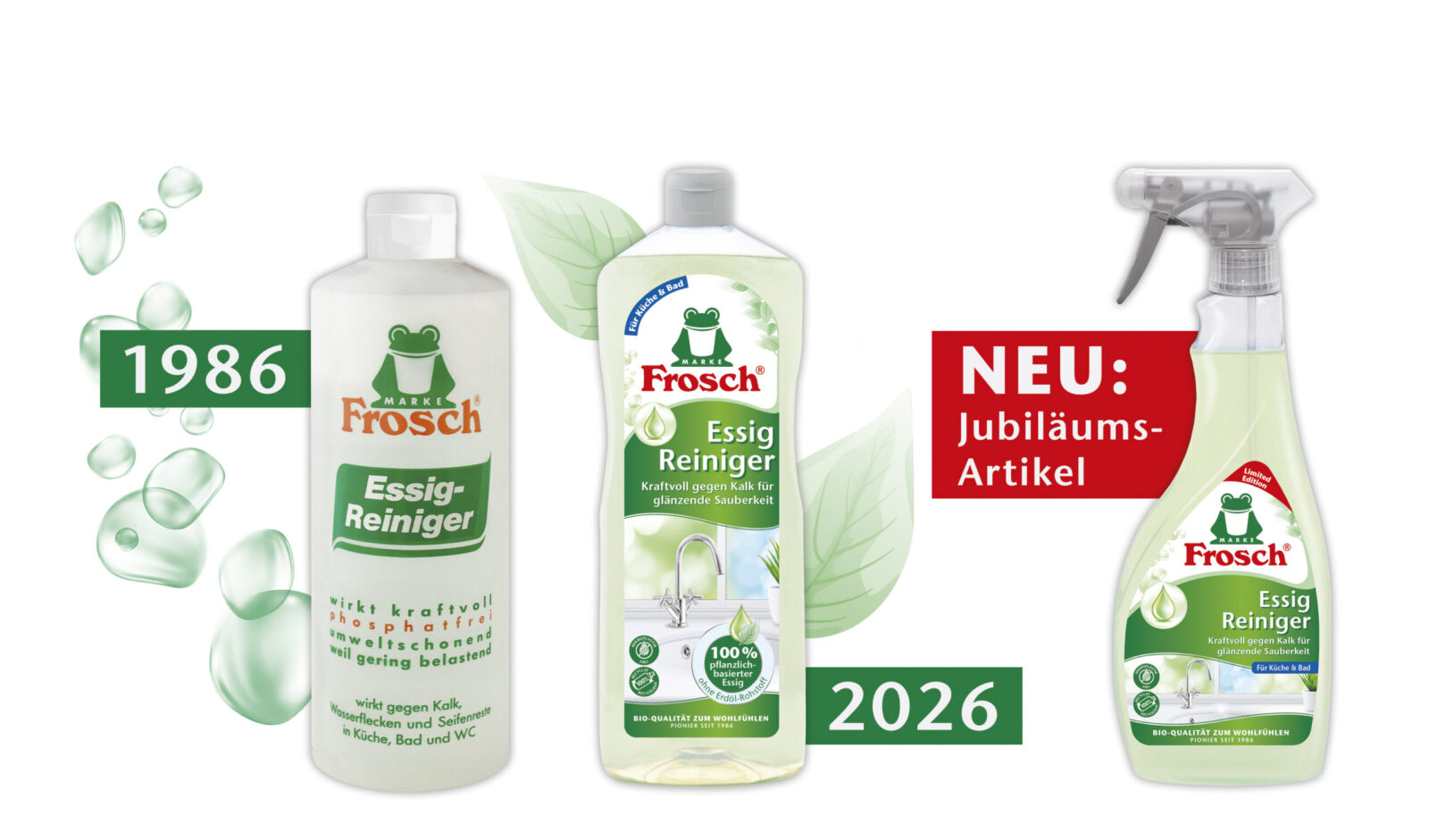
The first Frosch product bore the modest name “Neutral-Seifenreiniger” (English: neutral soap cleanser). The concept behind it, however, was unique. Products were to be harmless to people and the environment and made with plant-based ingredients, i.e., renewable raw materials, without petroleum or animal-derived components. Then and now, the brand relies on proven natural ingredients instead of aggressive substances.
And the wonder of it all? Frosch puts an end to preconceived ideas and myths. The brand proves that ecological products can deliver high performance. The outstanding quality of the laundry detergents and cleaning products is today regularly confirmed by good results from Stiftung Warentest and Öko-Test.
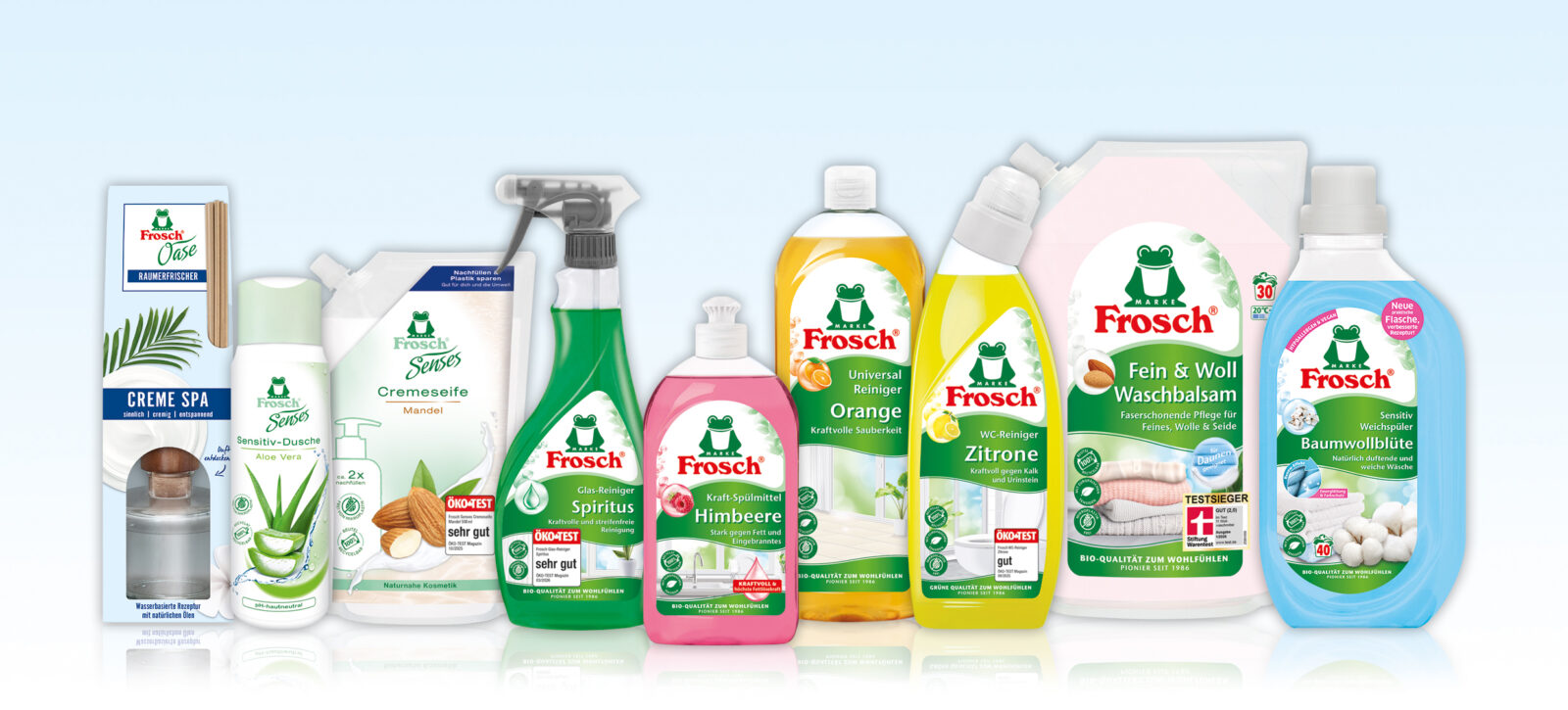
The Frosch brand range has grown to more than 80 products, from washing and cleaning to personal care with Frosch Senses soaps and shower gels. Currently, Frosch is available in nearly all Europen countries and in demand in the Far East, e.g., Japan and South Korea.
Frosch celebrates its birthday with customers
Customers have a chance until July to meet the people behind the Frosch brand. Under the motto “Frosch celebrates its birthday”, some 150 parties will be held in retail grocery stores and health & beauty aids stores. On the party days, visitors can take part in a prize drawing and get information about the Frosch products, initiatives and the issue of independence from petroleum.
At the Frosch shop in central Mainz, the birthday will be celebrated with a two-day event on June 19 and 20. Lots of Frosch fan articles will be offered along with special products with genuine added value, such as a birthday-themed storage container for Dishwashing tabs and the new vinegar cleaner in a spray bottle.
Biodiversity project with NABU in honor of the birthday
The Frosch brand, like its parent company Werner & Mertz, has an integrally sustainable orientation. In addition to manufacturing environmentally friendly products, the family enterprise puts its efforts into protecting biodiversity and species variety. In cooperation with its long-term partner NABU (Nature and Biodiversity Conservation Union), Werner & Mertz is marking the Frosch brand’s 40th birthday with a joint project, that is, planting a new five-acre riparian alluvial forest in Nieder-Ingelheim.
Natural riparian forests are habitats with the greatest biodiversity in Central Europe, and with the exception of some remaining examples in the Upper Rhine region, they have all but disappeared. The latest research shows that riparian forests can store great amounts of carbon dioxide not only in the trees, but in the soil too. With this project, the cooperation partners are making more room for this valuable habitat and its exceptional biological diversity.