

The good anthropocene can work
Why are intact ecosystems essential to our future?
This question was taken up at the 9th Forum Anthropocene
Werner & Mertz has known for a long time that functioning ecosystems are the foundation for our lives and economies. That’s why we have spent decades working for the protection of species diversity, preservation of biodiversity and conservation of natural habitats.
In a series of interviews, we speak with leading experts from business, the scientific community and nature protection about the urgent questions of our time and about the challenges and opportunities of a sustainability transformation. The conversations reveal different perspectives and make clear that a livable future can be achieved through innovation, social responsibility and a new understanding of our relationship to Nature.

Prof. Hans Joachim Schellnhuber
Why the future needs “high tech meets no tech”
Humanity is living beyond its means – Hans Joachim Schnellnhuber is convinced of that. The renowned climate expert has done pioneering work in many different areas of climate science. As the founding director of the PIK (Potsdam Institute for Climate Research), he led the institution from 1992 to 2018 and also was a member of the United Nations‘ Intergovernmental Panel on Climate Change (IPCC) for many years. Today he is the general director of the International Institute for Applied Systems Analysis (IIASA) in Austria.
In our conversation, Schnellnhuber says that our current economic system is based on an outdated understanding of growth and explains why we need the transformation to a completely regenerative economy. In addition to the energy transformation, he considers a material transformation crucial to moving away from fossil and emission-intense raw materials to renewable and regenerative materials.
His vision of a “good anthropocene” links technological innovations with Nature’s proven solution strategies. Schnellnhuber says that the major challenges of our time can be mastered only when high-tech solutions interact with successful strategies found in natural systems.
Reinhard Schneider
The circular economy as key to nature and resource conservation
Over millions of years Nature has provided an excellent example. It uses resources economically and efficiently and operates in cycles. Reinhard Schneider, owner of Werner & Mertz, says that approach is the key to a sustainable future.
In the interview he speaks about corporate responsibility in the athropocene epoch, the protection of natural resources, and the question of how product design for an effective circular economy can contribute to conserving resources, reducing CO₂ emissions, and preserving biodiversity.
It’s apparent that the transformation to a sustainable way of doing business can succeed only when companies, politicians and consumers take responsibility together.
Barbara Pucker
Biodiversity as the basis for livable Nature
Nature has an incredible capacity for regeneration and the means of finding new ways to adapt to changes. The critical question, however, is whether we will survive in the long run if we do not make fundamental changes in the way we handle Nature, says Barbara Pucker.
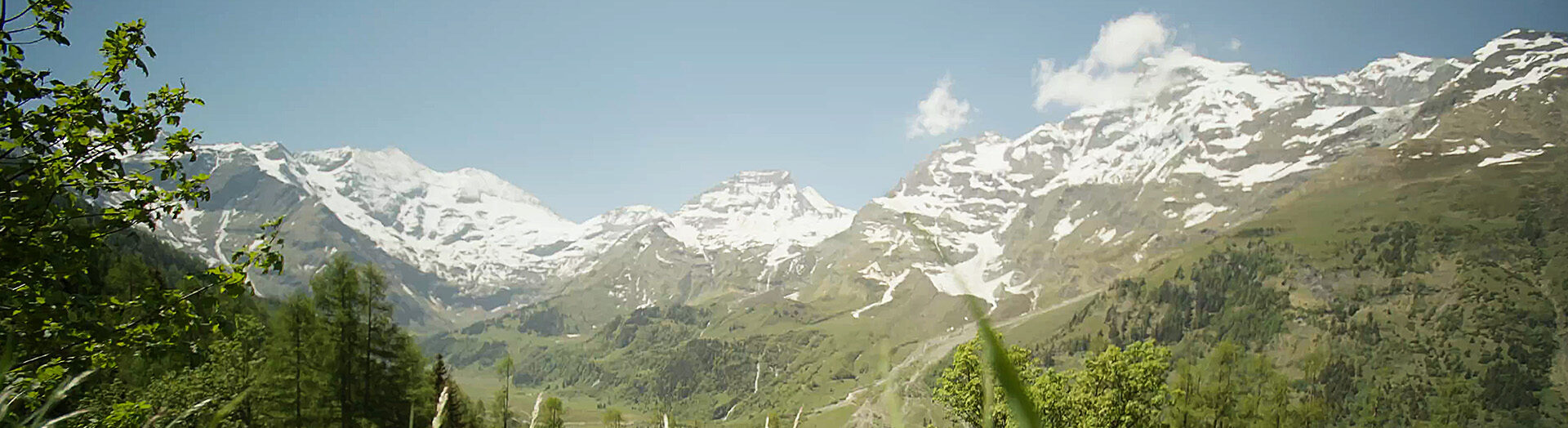
In the interview, Parker, Director of the Hohe Tauern National Park, speaks about the close connection between human activity and the state of our ecosystems. With concrete examples, she shows how Nature‘s delicate equilibrium reacts to changes and explains the consequences that the loss of species can have for entire ecosystems.
The park director also tells us why biodiversity is indispensable to stable ecosystems, how consumer decisions are related to nature conservation, and how raising awareness plays a key role in the conservation of our resources. The message was clear: The protection of Nature is ultimately the protection of our own future.
Liliana Dagostin
Sharing responsibility for alpine ecosystems
“What would we be without species diversity?” Liliana Dagostin put this question at the center of her interview. For the head of the Land-Use Planning and Nature Conservation department in the Austrian Alpine Association, intact natural areas are much more than landscapes worthy of protection. They are the foundation of our life and places that touch, inspire and connect people.
She talks in the interview about the effects of climate change on sensitive alpine ecosystems, the meaning of sustainable raw materials and the role of the circular economy in sustainable development. Dagostin points out that protection of our natural resources can succeed when business and nature conservation work together and recognize the limits of natural resources.
With real-life examples—from mountain forest projects to successful cooperative efforts involving the Alpine Association and Werner & Mertz—she proves how sustainable solutions can be worked out. Her appeal: greater awareness that our resources are finite and more responsibility for the unique natural environment in which we live.
ZEIT Panel Discussion
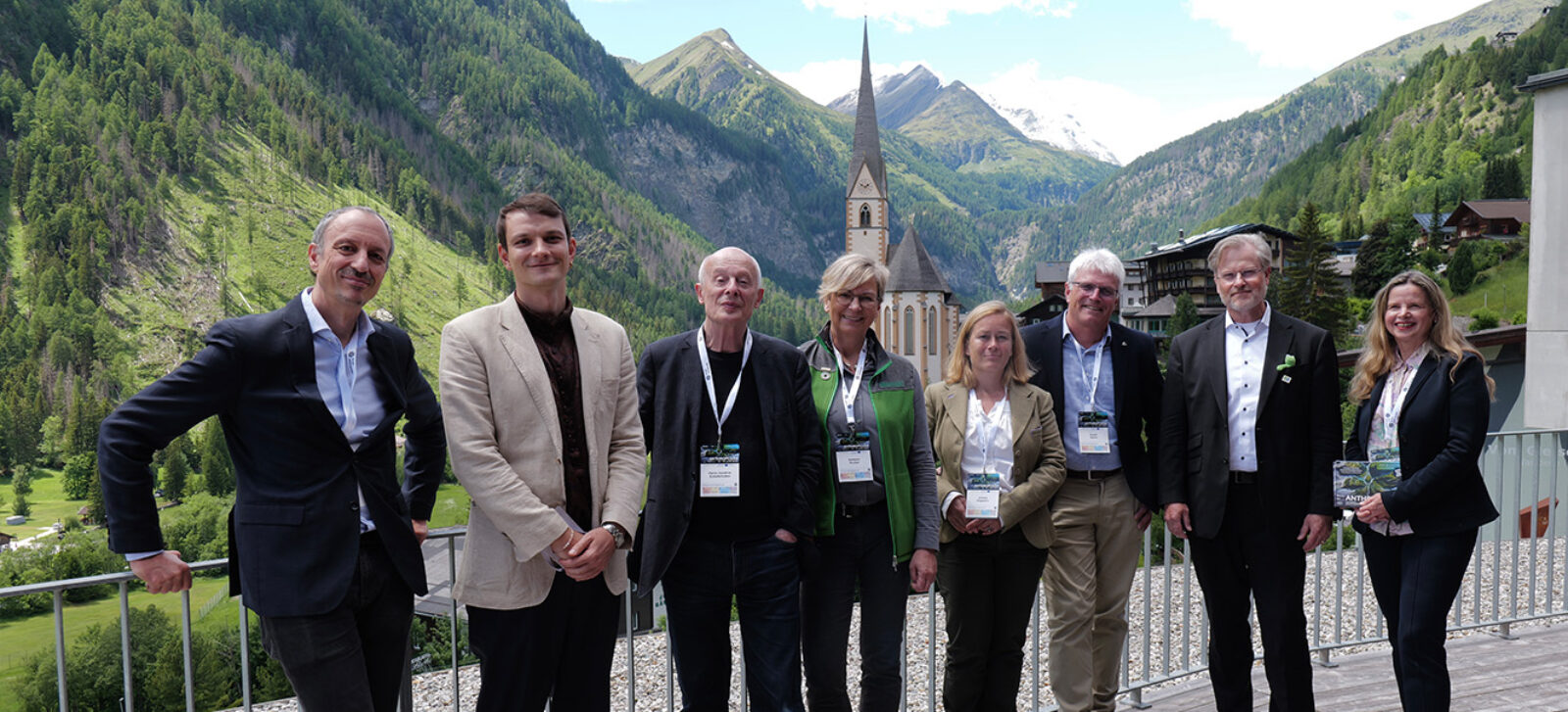
All four conversation partners were invited to participate in the ZEIT panel discussion “CONNECTEDNESS. ZUKUNFTSVERBUNDEN. National Parks in the Anthropocene“ held during the Forum and moderated by Fritz Habekuß, DIE ZEIT. The entire discussion is available on the Forum Anthropocene Website
More background information is in our press release.
Good to know:
The ANTHROPOCENE Epoch is a designation given to the time up to the present during which human activities have brought about radical, permanent and global changes to Earth‘s natural processes. The Forum Anthropocene is an interdisciplinary platform where Nature, innovation and social responsibility overlap. It brings together representatives from scientific research and civil society, politicians, business leaders, and artists in a joint discussion about the future.